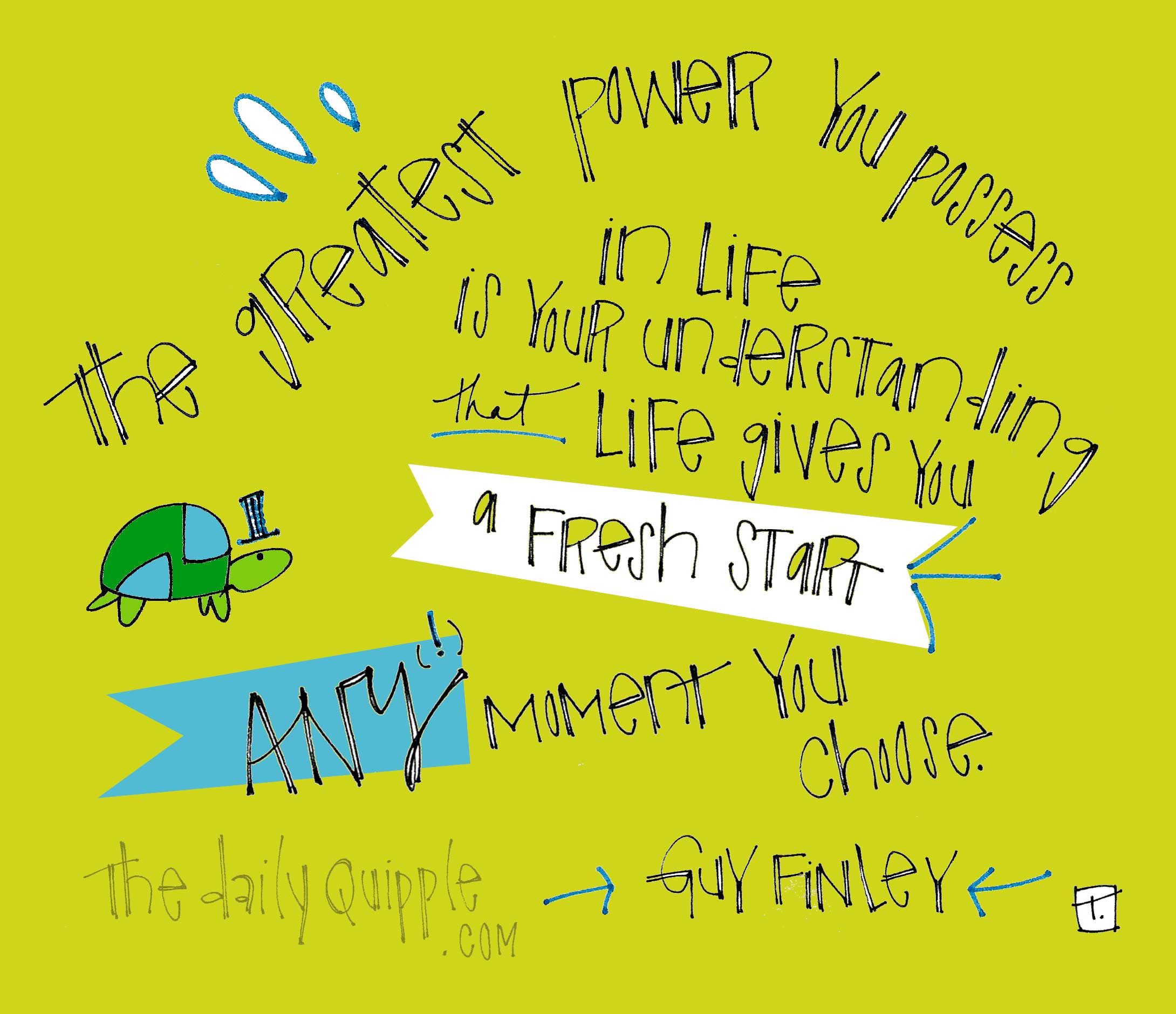
failing up.

quipple622freshstart

image source

In all of our divisional parent nights and in our language with students, we are talking about failure and struggle. We are speaking of these things with a positive tone to set the message that failure is a part of the learning process. In fact, it is really the most important part of the learning process. If we constantly achieve instant success, it is unlikely that we will gain the deep learning that is necessary for critical thinking, problem solving, and creativity. We have a collective responsibility as the adults in the lives of these young humans to make struggle and failure a regular, if not celebrated, practice of life.

fallsevenup8

Japanese Proverb

In her new book, The Gift of Failure, middle school educator, author and parent, Jessica Lahey weaves her tale of learning the value of failure. Her first paragraph lays out the clear, if alarming, thesis of the book: “today’s overprotective, failure-avoidant parenting style has undermined the competence, independence, and academic potential of an entire generation.” She then goes on to share her own story of being an overprotective, failure-avoidant, parent and teacher and how she grew into one who models and embraces failure and struggle for her children and students. Along the way, she shares her research base, including Edward Deci’s Self Determination Theory (a favorite of mine) and provides practical applications such as how she was transparent with her kids about making the change to be less “do for” and more guide.

Her childhood mirrored my own. My family lived on a decent plot of land for suburban Maryland and a thickly wooded creek ran along side and behind my house. A typical Saturday would be spent down the street at a neighbors, throwing on waders and catching crayfish, or riding bikes to the 7-11 for slurpees. All of this was in the age before cell phones and statistically more crime. I had incredible parents who provided me with amazing opportunities like going to the Orioles or going to the Baltimore Symphony, taking piano lessons, and playing soccer. They helped with homework, especially math, but if I forgot it, too bad; I would learn next time to remember it. Getting to swim practice every day? From about age 10, my mode of transportation was my trusty purple ten-speed and then my teal Hyundai which was only given to me so I could become the chauffeur to my younger sister. My household chores included setting the table for family dinner, doing my own laundry starting in middle school, and the dreaded leaf raking and snow shoveling.

Likewise, I had teachers who felt my struggle and who empathized deeply with it. However, they knew their main goal was not to make me happy. They knew that struggle would be essential to making me an independent, competent, and autonomous person. I could tell you countless stories of educators who have encouraged me to fail up—to fail in a way helped me grow forward.

In the two decades or so, this type of failure has grown out-of-style. Parenting, coaching, and teaching trends have leaned towards the happiness of our children rather than celebrating their struggle. The over-scheduled lives of our children have led us —the adults in their lives — to do more for them. Or our own desire for things to be a certain way has inhibited our ability to let kids take control of things (Specifically, I’m thinking of learning to tie my shoes or the proper way to load the dishwasher.) Difficulty and patience have given way to comfort and expediency and the losers, in the long run, are our children.

This is not meant to scold us or to put all of us in the same guilty bucket of providing a free-wheeling life for children. This is a call to action for adults, both teachers and parents, to build opportunities for their own success through failure. Perhaps this means letting them forget that PE uniform or homework assignment. Or maybe it means a few more chores, done to their best effort and a little less comfort. In learning the value of failure and hard work, they will reap the rewards of autonomy, self-reliance, and competence in a way that will serve them for life.
This is not meant to scold us or to put all of us in the same guilty bucket of providing a free-wheeling life for children. Rather it is a call to action for us, the adults making the decisions for our children, to build opportunities for their own success through failure. Perhaps this means letting them forget that PE uniform or homework assignment. Or maybe it means a few more chores, done to their best effort and a little less comfort. In learning the value of failure and hard work, they will reap the rewards of autonomy, self-reliance, and competence in a way that will serve them for life.

freshly sharpened pencils

One of my favorite movies is a fun romantic comedy called “You’ve Got Mail.” It is chock full of quotables but “I would send you a bouquet of freshly sharpened pencils, if I knew your name and address.”, is one of my favorites. The start of school is such a wonderful and frenetic time. We scurry to prepare backpacks, uniforms, schedules, and permission forms as we start to renew morning routines and get back into the swing of school. We look with anticipation of the first day wondering who we will sit with at lunch and will the teachers be fair, funny, or firm? (Hopefully all three!) It is a fantastic time of year.

As I start my 14th school year, this time as an administrator, I still feel all of those anticipatory things. I love getting back together with teachers and setting our goals for the year. I love seeing students with new shoes on and a look on their face that says, “I’m not sure how I feel about this yet, but I’m excited.” I love seeing the wide eyes of a 5th grader walking into the Middle School for the first time and the sleepy eyes of an 8th grader for whom this is old hat. It signals that it is time for us to begin anew.

While we have traded freshly sharpened pencils for iPads and styli, paper books for e-books, and the monthly newsletter for the monthly email, the start of school continues a timeless rite of passage for children. We “do school” differently than in ages past. School becomes a place to learn so much more than facts and figures. Our schooling now includes lessons on how to learn so much more than what to learn. We realize, in the 21st Century, that much of what we may have been taught in school is accessible at our fingertips from the device in our pocket. So we, the teachers, have a great opportunity to learn for ourselves how we can innovate our classrooms to reach the kids we have now and prepare them for their future. This process of renewing our professional practice is a model for our children on how to continually grow throughout a lifetime.

So we begin our year with great excitement and anticipation as we begin to map our 2015-2016 journey. Perhaps a nice, fresh, Dixon-Ticonderoga #2 will find it’s way into a backpack somewhere. To remind us from where we have come.

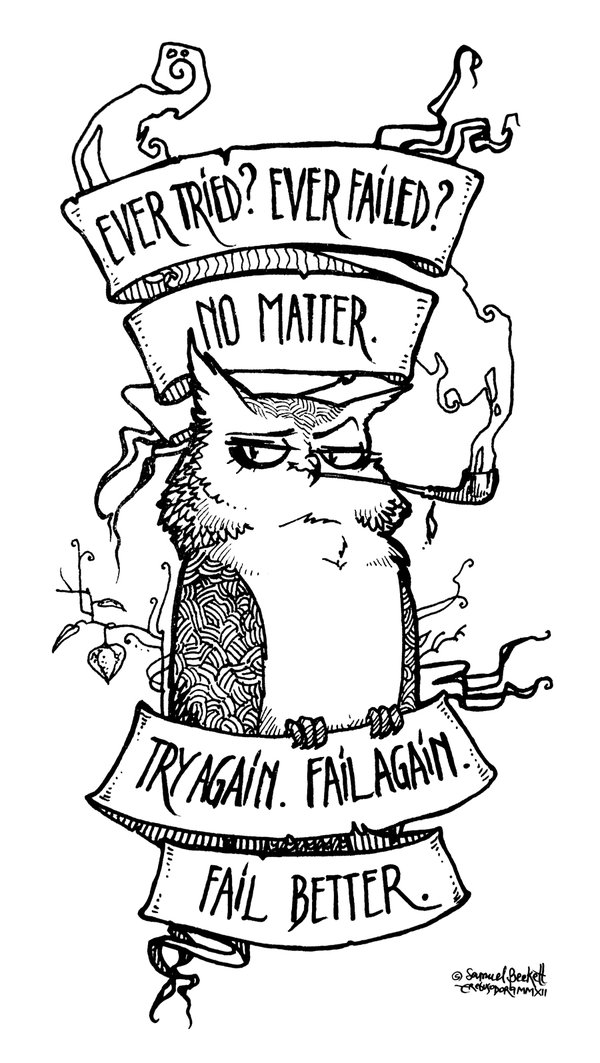
fail better.

failbetter

image source

I am absolutely obsessed with Jessica Lahey‘s new book, The Gift of Failure: How the Best Parents Learn to Let Go So Their Children Can Succeed.  I am only half way through and I’ve decided this is a must read for all big humans who love and/or work with small humans. She knocks it immediately out of the park in her first paragraph:

“today’s overprotective, failure-avoidant parenting styles has undermined the competence, independence and academic potential of an entire generation.” p.xi

She goes on to talk about her own realizations as a parent and teacher and how she feels as if she was doing them a dis-service by promoting success and preventing failure. It is through her own stories that she takes the blame off of parents and teachers who have promoted a success-driven environment.

What I love the most about this book, so far, is her focus on the work of Carol Dweck and Edward Deci. She validates my views as a teacher-leader in my beliefs about growth mindset and Self-Determination Theory. When we provide opportunities for our children to struggle and/or fail, we are providing the greatest possibility for them to grow into resilient, competent adults. She also validates my belief in encouraging intrinsic motivation. Sticker charts, money for grades, or any form of food motivation do not equate to student success. I’m look at you, Class Dojo. (So much research on this, I don’t even know where to begin.)

I’m about to delve into Part II and III and can’t wait to share more…stop everything you’re doing and go get this book!

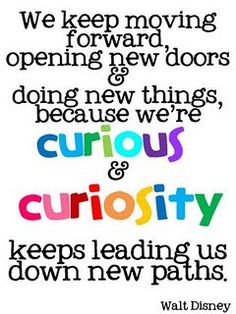
ask the questions

curiosity

image credit.

The best gift of coming in to a place as a fresh set of eyes is the ability or permission to ask questions. Even if I don’t necessarily have permission, I am taking the liberty. This time is such a gift. It is a time to open one’s mind and ears and listen with a full heart. To take in as much information as possible, synthesize it, analyze it, and determine the good, the bad, and the ugly, so to speak. Or in my case, the awesome, the ok, and the “let’s take a look at that” (no bad, no ugly, of course!)

This makes me think of the journey our children take each day as they go through 4-7 classes, practices, clubs, rehearsals, meetings, and meals. They have abundant interactions with peers and adults each day that present them with the opportunity to accept what they see and hear, or ask questions. Now obviously, we don’t want to develop a generation of pesterers. (Yes, I think I made that word up.) However, we do want our children to think deeply and critically. Some answers are easy. Do you want Chipotle for lunch? Yes, always yes. Some are hard. Should I give pocket change to that homeless person? For me, still yes, but for many a very hard answer.

Are we giving our students the permission to ask questions? Are we encouraging them to weave their journey by grappling with tough questions where yes and no are not so easy? In order for them to do this, we need to provide them with trusted adults-teachers, mentors, parents, and coaches-who build relationships first. A child who knows an adult trusts, loves, and believes in them is a child who will ask the questions. Then we provide them the space to ask and the tools to ask.

How? Why? I Wonder? Are all simple words and phrases that open our children to deep and critical thinking. We are in an era where we are reconsidering, rethinking the work we do in schools. We are asking ourselves tough questions. One thing will certainly remain, we must encourage our children to ask them, too.